What Makes the Baku City Circuit F1’s Most Unpredictable Race?


Few Formula 1 races have built a reputation for unpredictability quite like Baku. The Azerbaijan Grand Prix takes place on the Baku City Circuit, a street track where long flat-out sections sit alongside some of the tightest corners on the calendar. A small mistake can change the order quickly, while a well-timed strategy call can turn an ordinary afternoon into a podium finish.
Baku has been part of Formula 1 since 2016, when the event was staged as the European Grand Prix. The Azerbaijan Grand Prix followed in 2017, immediately producing a chaotic race won by Daniel Ricciardo. Ten years after its debut, the circuit remains one of the sport’s most difficult venues to predict.
A Circuit Built Around Contrasts
Baku City Circuit is 6.003 kilometres long, with 51 laps making up the Azerbaijan Grand Prix. The layout winds through modern parts of the city before entering the historic Icheri Sheher area, where the track becomes narrower and more technical.
Teams therefore face a difficult setup decision. Extra downforce helps through slower corners, yet too much drag can leave a car vulnerable on the long run beside the Caspian Sea. Finding the right compromise is central to Baku’s challenge.
The Castle Section Leaves Little Room for Error
The most recognisable part of the circuit comes around the old city. Turns 8, 9 and 10 create a narrow passage beside Baku’s medieval walls, with the tightest section measuring only around 7.6 metres across.
Mistakes here have immediate consequences. There is little space to recover from a lock-up or awkward line, while a damaged car can quickly bring yellow flags or a Safety Car into play. Charles Leclerc’s qualifying crash at Turn 8 in 2019 showed how quickly confidence can disappear in this section.
The Long Straight Can Change Everything
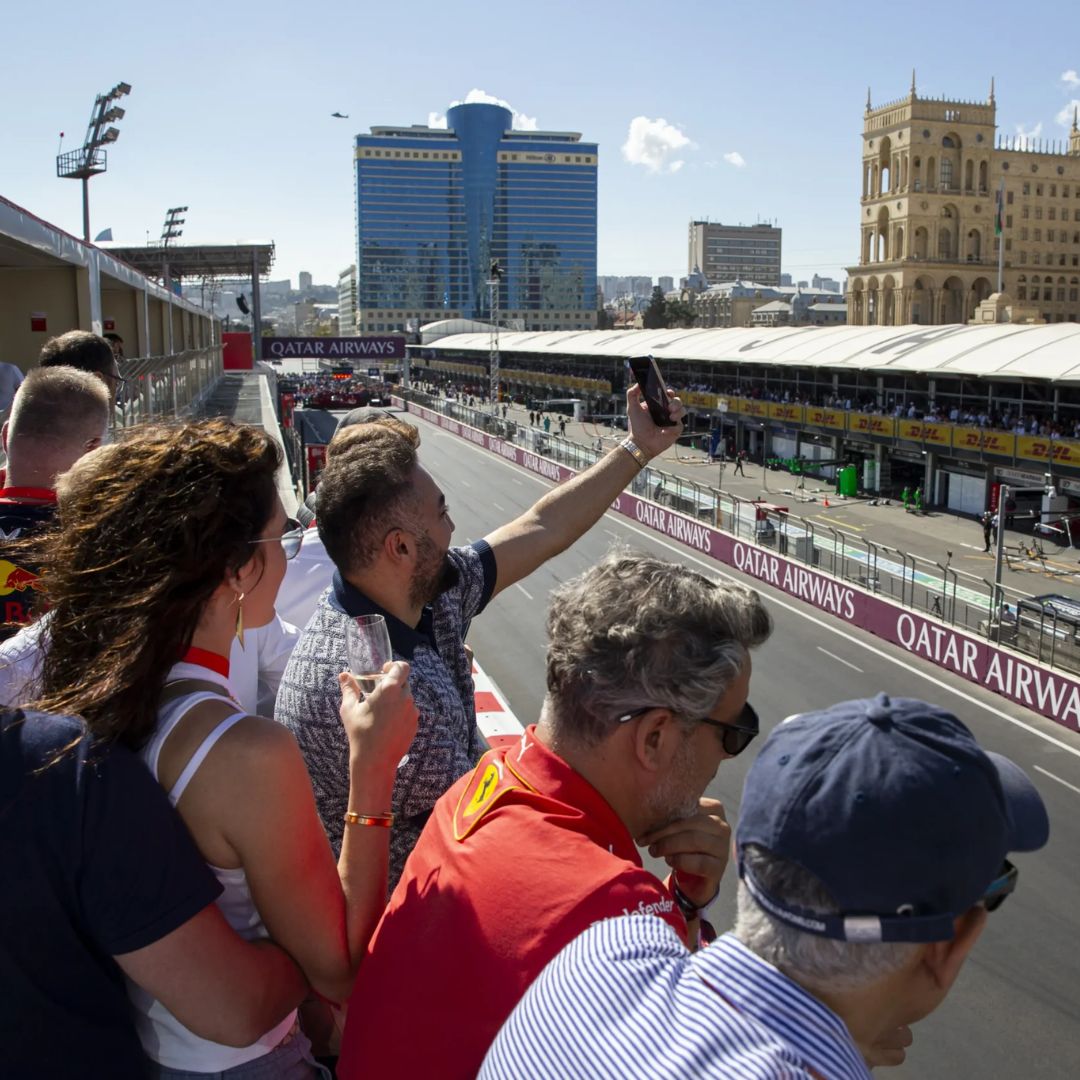
At the other end of the circuit, Baku offers one of the longest full-throttle runs on the F1 calendar. Cars accelerate towards Turn 1 along the waterfront, giving drivers an opportunity to use slipstream and DRS before a heavy braking zone.
Qualifying gaps can be deceptive. A car that looks strong in the twistier parts may lose time on the straight, while a driver starting behind a rival can attack before Turn 1. Overtaking opportunities give the race another layer of uncertainty, particularly when tyre performance begins to fade.
Safety Cars Can Turn the Race Upside Down
Baku’s walls sit close to the racing line in several places, making incidents capable of affecting the whole field. Safety Cars have frequently changed the timing of pit stops, compressed gaps between drivers, then created fresh strategic choices when racing resumes.
Red flags can have an even greater impact. The 2021 Azerbaijan Grand Prix offered a memorable example when Max Verstappen suffered a late tyre failure while leading. The resulting red flag created a two-lap sprint, with Lewis Hamilton also losing his chance of victory after going off at Turn 1 following the restart.
Baku Has a History of Surprises
Baku’s reputation was established early. Daniel Ricciardo won the chaotic 2017 Azerbaijan Grand Prix after multiple incidents, Safety Cars and changing fortunes. Lance Stroll finished third, one of the season’s most unexpected podiums.
Several races since then have reinforced Baku’s reputation as a place where leading positions can disappear quickly. A strong qualifying result helps, yet offers no guarantee of a quiet afternoon. Drivers must manage tyres, traffic, braking points and restarts while staying alert to events elsewhere on the circuit.
Strategy Matters More Than It First Appears
Baku rewards teams that can react rather than simply follow a pre-race plan. Pit-stop timing becomes particularly important when an incident changes the gaps, while tyre choice can influence how confidently a driver attacks late in the race.
The long straight also affects tyre management. Drivers need enough grip for technical sections without sacrificing speed where overtaking is most likely. A strategy that looks conservative early in the race can suddenly become valuable if a late Safety Car creates an opportunity.
What to Expect From the 2026 Azerbaijan Grand Prix
The 2026 Azerbaijan Grand Prix runs from 24th to 26th September, with the race on Saturday 26th September. The unusual Saturday race follows a calendar adjustment to accommodate a national day in Azerbaijan.
Practice takes place Thursday, qualifying follows Friday, then the Grand Prix arrives Saturday afternoon. The format gives the weekend a different rhythm, while Baku should again provide high-speed running, tight corners and limited margins.
Experience F1 in Baku With Hospitality
For fans travelling to the Azerbaijan Grand Prix, hospitality can add another dimension to a demanding race weekend. Premium F1 hospitality provides a comfortable base away from busy grandstand areas, with dining, refreshments and circuit views available in selected packages.
Corporate guests can also use the setting. A premium environment gives clients, colleagues and business partners time to enjoy the event together while staying close to the action.
Why Baku Remains So Unpredictable
Few F1 circuits create such a strong contrast between speed and precision. Baku can reward a driver with a fast car on the straight, then punish the smallest error a few corners later, while Safety Cars, red flags and strategy can change the picture without warning.
Baku remains compelling from the opening lap to the final restart. For anyone looking for an F1 weekend where the outcome feels genuinely difficult to call, Baku remains an intriguing destination.
Planning on attending the 2026 Azerbaijan Grand Prix? Impulse Decisions can help you explore premium F1 hospitality options for the Baku City Circuit, offering a comfortable base for the racing, dining and atmosphere all weekend.